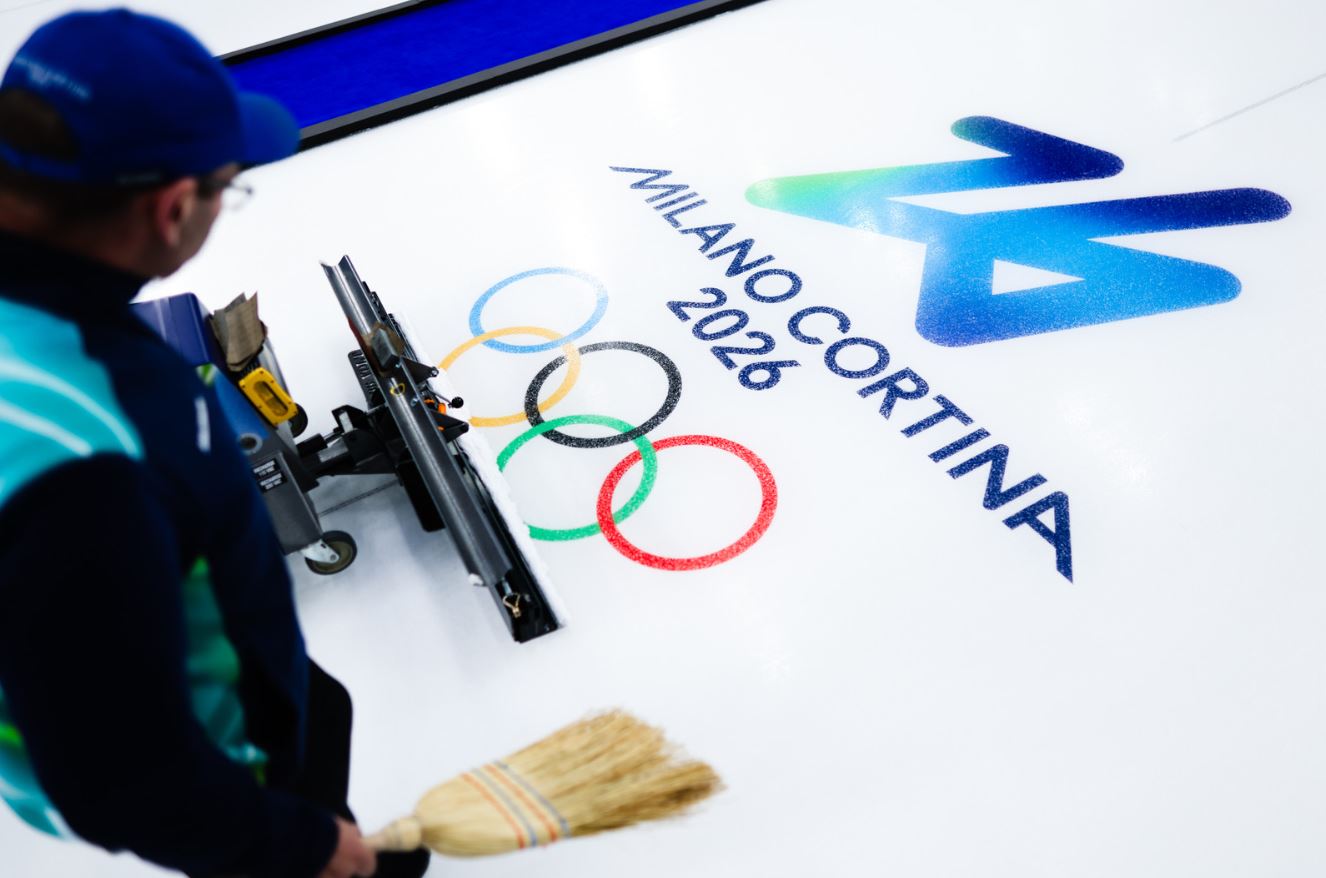
If there is one thing that involvement in the Olympic and Paralympic Winter Games has done for curling, it is certainly that — without question — it has raised the standard of play immeasurably.
And this Olympic influence is not just limited to just the athletes; it involves others behind the scenes too, including ice technicians.
The foundation of great curling
Everyone knows that good curling performance starts with good curling ice.
That’s why one of the key focus points in the development and training work carried out by the World Curling Academy in recent years has been training ice technicians.
Ice-making courses have been carried out across the globe, with tangible results benefitting players at all levels everywhere.
A milestone in Cortina
Now, in Cortina, a major landmark in ice maintenance has been reached: all members of the Olympic and Paralympic crews graduates of the World Curling Academy’s ‘Introduction to Maintaining Curling Ice’ course.
The lead Ice Technicians in Cortina are Mark Callen (GBR), Ivan Moglia (ITA) and Greg Ewasko (CAN), while the lead technicians for the Paralympics are Stefan Roethlisberger (SWI), Ivan Moglia (ITA) and Ingvild Skaga (NOR).
Working with these experts are crews of twelve technicians: in the Olympics there are ten Italians, one American and one Scot, and the Paralympic crew consists of ten Italians, one Slovenian and one Scot.
Hometown rinks to Olympic ice
A look at the record books shows that these individuals have attended course in places as far apart as Claut, Cortina and Turin in Italy; Minnesota in the United States of America; Aberdeen in Scotland; and Gizycko in Poland.
Marco Colman from nearby Claut in Italy is a member of the Olympic crew and said, “I’ve played curling played since I was eight years old, which is almost sixteen years now. I make the ice in my home rink in Claut.”
“This is my first Olympic Games; it’s like a dream for me. It’s a great experience and opportunity for me — so close to my hometown — to learn and improve myself. Here at the Olympic Games, I’ve learned that there are a lot of things I still need to know and improve. I need to practise a lot more. Making the ice perfect is not as easy as it looks.”
Being on the Olympic crew has left Marco hungry for more: “I would like to continue this type of job. Maybe working with other ice technicians — people with a lot of experience so I could learn more about this. To continue this experience would be awesome — even to the next Olympics if possible.”
Inspired by these stories and interested in ice making? Find development resources on the World Curling website.
About the Author